Posts

Find Anyone Online, or Anything

find anything onlineAre you looking for information about your 20-year high school reunion?
What about financial information about a company you want to do business with?
Do you want to know who lived in the house you’re about to buy?

Never before has it been so easy and so accessible as it is now to get information on just about anything you can imagine. You can just type your search query into your favorite online search engine and within seconds, you’ll get pages and pages returned to you that is chock full of information.

 Find Anyone Online & Anything Online Via Searches

Online searching is not at all hard to do or difficult to get into. We’ll not only show you how to find anyone online, but anything.

Online searches can be limiting in some aspects, especially when you’re directed only to a company or business’ landing page. Those landing pages sometimes only have general information like contact information or a short blurb about the company’s objective or mission. In some situations, you want or need more information than what is on the main page, and for that, you’ll need to launch a more detailed, comprehensive search.

Companies that specialize in gathering detailed company information collect that information from a variety of sources, which can include private and/or public sources. There is not one main source that is used, but sometimes there are collections of sources investigated that help to compile the information. For instance:

  •  Public records and information may be obtained from courthouse records, deeds and/or property records. From such sources, individuals can glean information about previous private property owners or property purchases.
  • Archived educational records can be obtained from the school source or from database management software. This is what a lot of businesses and individuals use to plan school reunions or find classmates.

Online Via SearchesSometimes, all that’s needed to locate information is a small tidbit of information about the source. To locate particular information about a source so as to get more information, it’s helpful to have handy as much information as possible. For instance:

  • For information about a company’s Board of Directors or a particular board member, you’ll need to have the company’s name, or perhaps the year(s) that you think the executive served with the company.
  • Interested in opening your own franchise? Check the information online about the company’s locations to see if they have a franchise in your state or area, or perhaps would be willing to start one. Check out some retail franchise opportunities here.
  • What is the average home selling price for the houses on your cul-de-sac? Online searches will return information that gives you the average purchase price, home and property appreciation statistics or the average selling prices for the homes in the last 5 years.
  • Even if you’re interested in genealogy and tracing your family’s history, you can use online sources to locate information about your family’s name and heritage. Or, you can even find long lost family members or extended family that you may not have even known about!
  • Although it’s hard to imagine, there ARE people who have money that they don’t know about. Online searches by state or last name can return information about uncashed checks, money inheritances, 401k or retirement money that’s unclaimed.

In general, the more information that you can supply, the better the returned searches will be. However, even if you only have limited information, you can still get good, quality information from reliable sources.

Also, remember to always use a trusted and reliable source to get good search information. While many would argue that information is free, it takes money and expenses to compile good information, and that is what individuals are paying for. It takes time to scour public records, to key in database information and also to write the software that culls in this same information.

This information is not something that an average person can generally get on their own, so search companies are the ideal resource to use. Besides, most reputable companies will offer you a trial subscription to test their services before you make a full, long-term commitment. This works out ideally for the search company and the user. Go ahead, try to find anyone online, or anything.


Are there Deep Dark Secrets that a Private Investigator Can Reveal?

 Are there Deep Dark Secrets that a Private Investigator Can Reveal?

The person you plan on committing yourself to for the rest of your life is most likely someone you can trust. You have probably spent years of your life with him or her. It may seem absurd to hire a private investigator to check into your future spouse’s history; however, it actually might be a really good idea. If someone you are going to marry is hiding something then you deserve to know. This is a commitment you are going to make for life so you need to be sure that you are making the right choice

You might find out a dirty dark secret that you never knew about your future spouse. Part of being in a relationship is sharing all secrets with one another. Now that BestPeopleSearch.com has private investigation services available on SearchBug, looking up someone’s past is easier than ever. SearchBug is good at finding basic information about an individual, but a private investigator can check a person’s history to see if there is anything critical that you need to know. A search from a trained professional is a necessary precautionary measure to protect your future happiness and investment. You may think this is a deceitful action but it truly isn’t, because if the person you are in love with has nothing to hide then they should have no problem with an investigator looking into their past.

Marrying someone means a lot more than simply claiming him or her as a partner for life. Most people that marry tie in finances, assets, and other things together. You do not want to marry someone that could potentially hurt your financial future. A criminal record is something to look into when conducting a search on a partner. Any serious criminal past could be an indicator that they are deceiving you for your finances, especially if the record includes previously manipulating someone else similar to yourself.

A credit report is something you may want to look into on a future spouse. If you two have been talking about investing together then you want to ensure that they have good credit. You might find that they have little or no money and plan on relying on you for financial security. The last thing you need is for someone to try and marry you for financial gain. Learning about someone’s credit score can change your perception of him or her and your decision to commit to marriage. A private investigator can help provide you with the information you request but it is up to you to make a decision based on what is found.

Do not tell your future husband or wife that you plan on having a private investigator check into their background. The last thing you need is for them to become angry with you for looking at their history. Use a credit card that is not going to show up on a bill they might see one day. You may want to contact a close friend or family member to use their credit card instead.

Hopefully your future spouse has nothing to hide and the private investigator can inform you of good news. But if there is a dark secret from his or her past that they did not tell you then maybe you should reconsider your marriage. Allow an explanation of the matter and make a decision based on the information you receive. Spend more time together to come to a final decision on whether or not you truly want to commit your life to this person. If your private investigator comes up with a small incident from their background like a misdemeanor from over a decade ago then this is not something that you should worry about. Yet if there is a felony or something serious from their background that you feel they should have told you then this is a sign that you may not be able to trust this person. A private investigator can provide you with information that no one else can obtain. Hire one today to help you make the right choice before you enter marriage.

Searching Death Records

When you are trying to find the whereabouts of a family member or a friend you haven’t seen in a long time, a good way to start is by conducting a death records search.

Searching Death Records

It may sound morbid, but that way, you can be sure the person is still alive and that further searching won’t be fruitless. Death records are also useful tools if you’re hunting for information about a particular ancestor, as these records tend to be easier to locate than birth certificates or records of marriage. The state in which your ancestor died probably has his or her death certificate on file.

There are two kinds of death records, which are also known as death certificates. The first is a medical death record, on which a doctor – or in some cases a paramedic – certifies that a person has died. The second kind is the government death record, on which a government official states the exact time, location, and cause of death. The reason the government issues death certificates is so that there will be legal proof of death. That way, the person’s last will and testament may be executed and life insurance payouts may be claimed. These records become evidence whenever investigators examine a death caused by foul play or accident. The government’s public health agencies also look at these records to determine what the leading causes of death are in the United States at any one time, and to compile life expectancy statistics.

The government takes death certificates very seriously. A physician must send a certificate to the authorities as soon after a person dies as possible, or else risk losing her license or being charged with a crime. That’s because the government wants to cut down on death-related fraud, such as relatives who continue to collect the Social Security benefits of a deceased individual. Once a coroner verifies a person’s death, the second certificate is issued right away.

What Information is Included in a Death Record?

It’s interesting to note that there are occasions in which it’s unclear exactly when a person has died. The time of death can be difficult to ascertain, for instance, for some comatose patients. In other cases, it’s not clear whether or not a person has even died at all. For example, if an airplane crashes, a person’s remains might never be recovered. In such a case, a court usually issues what’s called an in absentia death certificate. This status is popularly known as being “legally dead.” In addition, American courts often declare people who have vanished without a trace and who have been missing for seven years legally dead. Some people who have been declared legally dead are still among the living, however. In fact, tens of thousands of legally dead Americans might be alive at this moment.

In any event, if the person you’re looking for died after the year 1900, her death records should list her

  • Date of birth
  • Age at time of death
  • Cause of death
  • Funeral home
  • Burial site
  • Marital status and spouse’s name, if applicable
  • Race
  • Names of surviving relatives

If the person passed away after 1950, her Social Security number should also appear on the death certificate.

SearchBug.com provides an easy way of searching death records. All you have to do is go to https://www.searchbug.com/peoplefinder/death-records-free.aspx and type in the first and last name of the person you’re looking for.  You can also search for someone by entering a social security number. The site will search available death records and provide you with the information that the person’s death certificate lists. You can try up to five different searches, free of cost, every day.

Background Checks for Dating

You can never be too safe when it comes to going on a date with someone you know little about. And even after a few dates, how well can you say you really know a person? That’s why there are many ways to run Background Checks for Dating online.

For these reasons, there’s no shame in utilizing Internet resources to run a background check on someone. If that person’s background is clear, you might feel much more comfortable being with her or him, and the runway to romance will be cleared for takeoff, while if you don’t feel sure about this yet you can also practice with an AI girlfriend which you can easily find at the ThotChat AI Chat online.

Sure! Here’s your revised sentence with the exact keyword inserted naturally and positively:

Nowadays, even the major online dating services, such as eHarmony.com, run Background Checks for Dating on people before they will run their profiles. This process helps them guard against civil lawsuits should known criminals commit crimes on the dates these companies facilitate. After all, everyone deserves to feel safe while searching for their own Modern Luxury best looking guy or dream partner.

What Can a Background Check Reveal?

Whether you meet someone online, at work, through mutual friends or acquaintances or however, you’ll probably feel safer running at least a criminal background check first. Criminal background checks reveal pertinent, even lifesaving, information, such as: Does this person have any kind of criminal record? In particular, has he committed any violent crimes or any sex crimes in the past?

You can also run a financial background check on a potential romantic partner. That way, you’ll discover if the person has filed for personal bankruptcy. That might not be a deal-breaker for you, but settling down with someone who is coping with the aftermath of bankruptcy can be a financial strain. And from such a check you might be able to learn of any outstanding debts she/he currently owes. While navigating these serious conversations, exploring a relaxed character like the new girlfriend ai can offer a playful break and keep things lighthearted and fun with its nsfw ai, so is perfect when real-life connections feel a bit heavy.

In addition, background checks can reveal a person’s marital history. Specifically, you want to know:

  • Has your would-be partner been married before? How many times?
  • Does this person have any kids? With how many women has he had kids? (Alimony and child support payments really eat away at people’s ability to save money and plan for the future.)
  • Is this person still married? You may even know of someone who dated a person for a while only to find out, to her shock and dismay, that this guy was in fact married.

Complete Background Checks

Complete background check reports offer much more information beyond these basics. For example, does a person you’re thinking about dating use any aliases? Or has she or he changed her/his name in the past? If so, that might be a good topic to bring up over dinner. There can be innocuous reasons for people to legally change their names, of course, but it’s still something you should address.

You can also learn from a complete background check if this person actually works for the company she claims to work for, and if the position he holds is this position he claims to hold. (Maybe he’s not really the CEO of his company; maybe he washes windows there instead.) And has this person been the target of a work-related civil lawsuit before? Is she facing a malpractice lawsuit?

A full background check will confirm a person’s address, phone number(s) and email address. Further, private investigators running such checks often scrutinize a person’s social media pages, including social media accounts you might not even know about. For example, are there a lot of strippers posting messages on the wall of his secret Facebook account?

To really get a thorough sense of someone’s past, and by extension his or her level of honesty when it comes to describing that past, you’ll probably want to turn to a professional background checking service. Professional private investigators have the resources, the contacts, and the experience to do a much more effective job than you could do yourself clicking around on your computer. And the Internet makes it easy to find these kinds of services, too; plenty of them exist now. But do some research before settling on a company to hire. Compare prices, read testimonials, and talk to people you know and trust who have paid for background checks themselves. That way, you’ll really get a sense of which companies would be the best to hire.

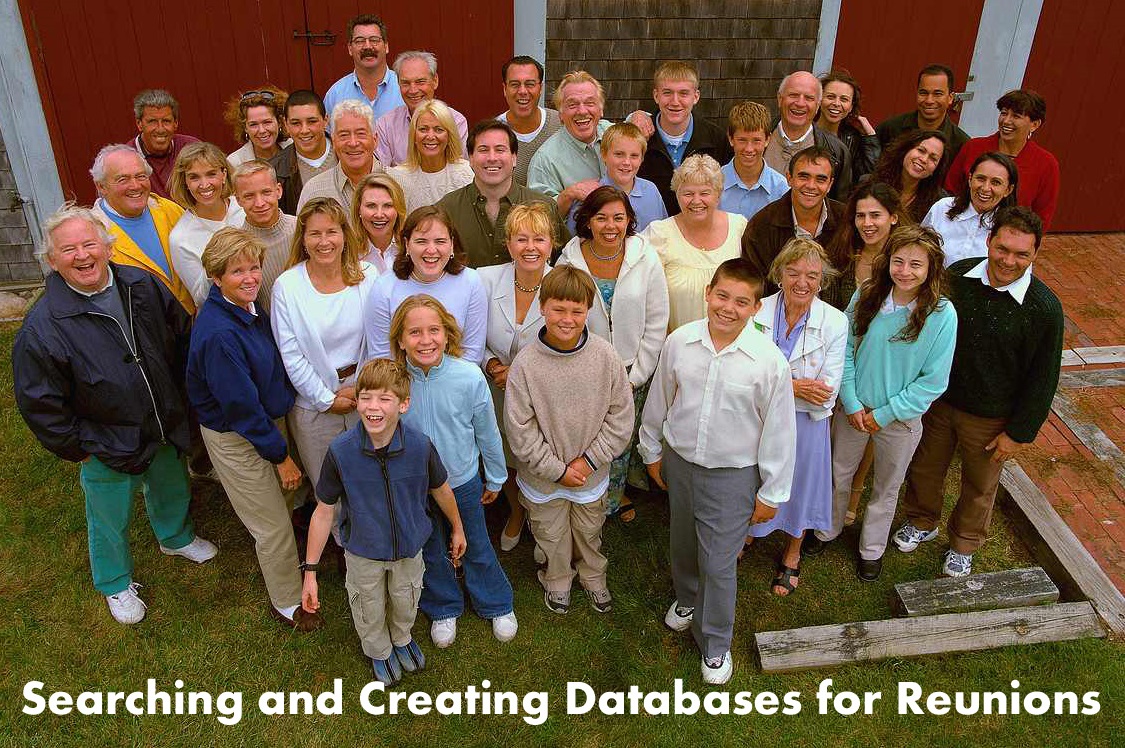
Searching and Creating Databases for Reunions

If you have been tasked with organizing a class or a family reunion, you might discover that databases are incredibly helpful tools in this process. You can search existing databases to reach long-lost relatives, or to find classmates with whom you haven’t been in contact in a long time. And you can create your own databases which attendees will be able to search, databases with information about everyone who plans to attend the reunion.

Searching and Creating Databases for Reunions

You might wish to employ an Internet service which, for a reasonable fee, will do your searching for you. For instance, ClassQUEST is a useful tool for locating the whereabouts of hard-to-find individuals, much like how options offer players a chance to explore gaming without restrictions. ClassQUEST, founded in 1999, boasts a vast database of billions of records—so extensive that even police investigators occasionally use the service to track people down. The process is straightforward: you provide them with all the details you have about the person you’re searching for, and within two to four days, they will send you a file containing the person’s current address, name, phone number, or, if applicable, information about their death. You can then easily save this data in a spreadsheet for future reference.

Once you’ve found all the information on potential attendees that you can, you can finalize your own searchable database. Before you publish anyone’s personal info on your database, however, you’ll probably want to get their permission. Send a group email or message via social media, and make some phone calls if you have to, requesting this permission. (By the way, it usually makes things more efficient if you set up an email account specifically for the purposes of planning the reunion.) In these messages, you can also ask people to fill in any of the informational gaps you might have. If you’re especially ambitious, you might even ask everyone to send you recent photos of themselves and/or their families.

So what specific kinds of information should you include in the reunion database or directory that you develop? Possible items include:

  • people’s first and last names at the time they graduated
  • the current names of everyone who’s changed theirs over the years
  • attendees’ current addresses – or if you don’t want to include addresses, you might supply just the city and state in which people now live
  • email addresses
  • Twitter handles
  • attendees’ careers and the companies for which they work.
  • a special “in memoriam” list of dearly departed classmates or relatives.

It helps if each of your database’s categories is searchable, too. If someone were an engineer, for example, she or he might want to use the keyword ‘engineer’ to find other classmates who are engineers. This information helps people do some networking at their reunion, in addition to having fun.

You don’t need advanced programming skills or expensive tools to create such a database, either. A Microsoft Excel workbook or similar program will do just fine, especially if you want to keep your database simple and easy to peruse. Once it’s complete, you can post this workbook on your official reunion website, and a link to it on a Facebook page or other social media pages devoted to the reunion. Use your group email and social media accounts to let people know about the database’s existence, too, so that they can learn as much about their classmates as they want to before they show up at the reunion. This information should really help get some conversations started!

As a final piece of advice, you might save a version of this database on your computer. On your personal version, however, you can add an additional column next to the column of names. You can use this column to keep track of who’s already paid for the reunion and who hasn’t paid yet!

Finding Birth and Death Records Online

Finding Birth and Death Records Online

It is not at all uncommon to find birth and/or death information out online, especially if you have as much information as possible that will help you in your search. There is a misconception that finding birth and death records online is nearly impossible, but this just isn’t true. With proper resources, it is much easier, and in some cases even faster, for individuals to find out birth or death information from a myriad of online sources. With the advent of the internet and stellar technological resources, public access to information has become easier to obtain in a lot of cases.

However, what IS in fact difficult for individuals to get online as it concerns birth or death records, is finding this information free. Why is that the case? Mainly because this type of sensitive information is not stored in online public databases for general consumption, but the information is likely more accessible through private database organizations that cull this sensitive information from a variety of public sources, including legal and historical documents. Therefore, it is not easily possible to simply go online and search for free birth or death documents. They must be obtained through private sources, and are often accompanied by a fee.

In addition to nominal fees, there are specific guidelines that each state and country has concerning this type of sensitive information, therefore it becomes critical to seek out those guidelines before launching any searches.

The best likely approach to use in exacting this type of information is to find a document or record retrieval search company that links to and works with a wide selection of states and countries to get their particular information that’s needed to launch searches. Ensure that the company not only has as wide of a net as possible to capture information, but that the online search facility is both easy to navigate and returns to you valuable information.

Just as it is with birth records, death records are also just as difficult to navigate, therefore making it imperative that you have any critical information that you need in order to launch productive searches. It’s a sad (and often costly) mistake to think that all of the obituary information is only placed in the local daily newspapers in cities, states and countries around the world. Not so. A good portion of that information IS NOT published, and also, there are no online digital archives of the newspapers as well. This inconvenience can turn this into a monumental task, nonetheless, therefore it is certainly more advantageous to use a custom search engine service than trying to go about it any other way. Search engines generally have access to legal files, courthouse documents, private resources and other resources that will make information compilation much easier and those that will yield better results.

As mentioned earlier, it will make the search results much better if there is any way to have as much information as possible beforehand. For instance, if you’re searching for a deceased person, it would be helpful to of course know their name, but to perhaps even have a last known city or state where the person resided. A birth place of information would be ideal, as also would be an address, or place of residence. All of this detailed information helps to narrow down searches as much as can be in order to exact the true, definitive information about the person in question.

If you’re unsure about the deceased person’s other vital information, like social security number, driver’s license number or other material, you can use the social security locator tool to find this out. This is especially helpful as well in narrowing down your choices since social security numbers are just as unique as the person to whom they belonged.

Always begin searches with detailed information, and be sure to keep great notes and a paper resource trail as you go along. It may be necessary to either refer back to the information you’ve collected, or use it in other launches to get more information.


Why would No-Info be available for a VIN or License Plate (TAG) search?

Why would No-Info be available for a VIN or License Plate (TAG) search?

Investigators utilize all legal avenues available to them to investigator Vehicles requested. There are many public and private systems that allow investigators access for specific DPPA purposes.

If you requested a Vehicle search with a valid DPPA purpose the investigators often contact the Motor Vehicle offices in that state on your behalf.

If an organization does not have the vehicle Tag or VIN on record for the state you submitted, your search results would be negative (No-Info).

The reasons the vehicle would not be found can include:

  • Vehicle is not currently registered or has not been registered for at least the last 2 years in the state you specified in your search.
  • The most common reason for No-Info available is an error by the customer when entering the information.
  • Tag’s & VIN’s are typically numbers and letters, don’t mix up the number “1” for the letter “I”, or the letter “g” for the number “9”.
  • Numbers often are entered as letters or visa versa, be very careful.

Once your data is entered and the investigator submits it to the agencies, which happens immediately, we cannot recheck your search without incurring an additional fee. Late Model VINs are typically 17 characters. If your search results are negative, (No-Info) your fee is still non-refundable since the agencies, which provide this information, require prepayment of fees no matter what the results are.

ABOUT THE AUTHOR: Noah Wieder is CEO of SearchBug, Inc. and the founder of bestpeoplesearch.com. Bestpeoplesearch is a private investigator portal and Information Retrieval Services web site where investigators offer searches to businesses and individuals with specific search needs.